Converse Gold Project













Property
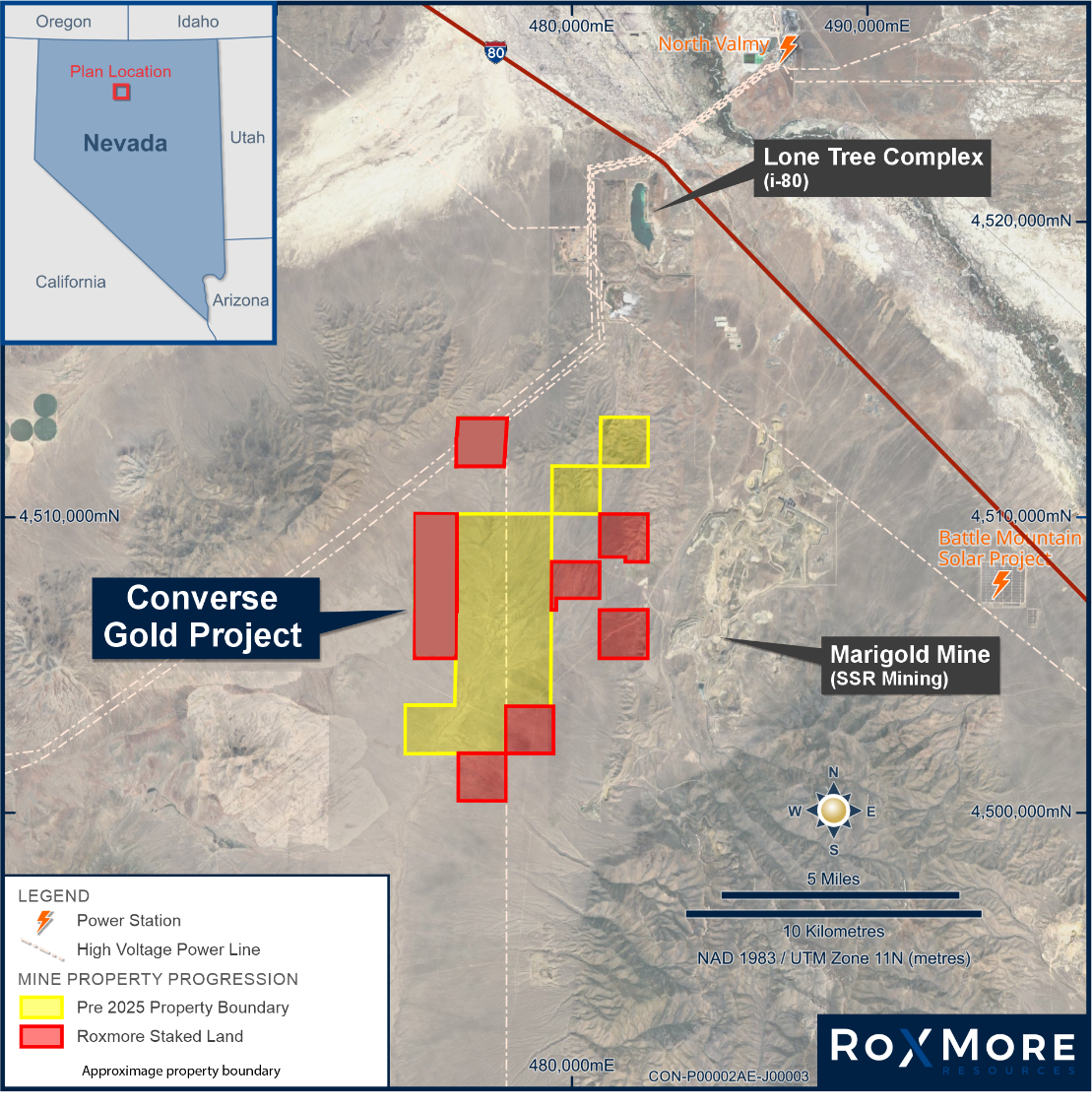
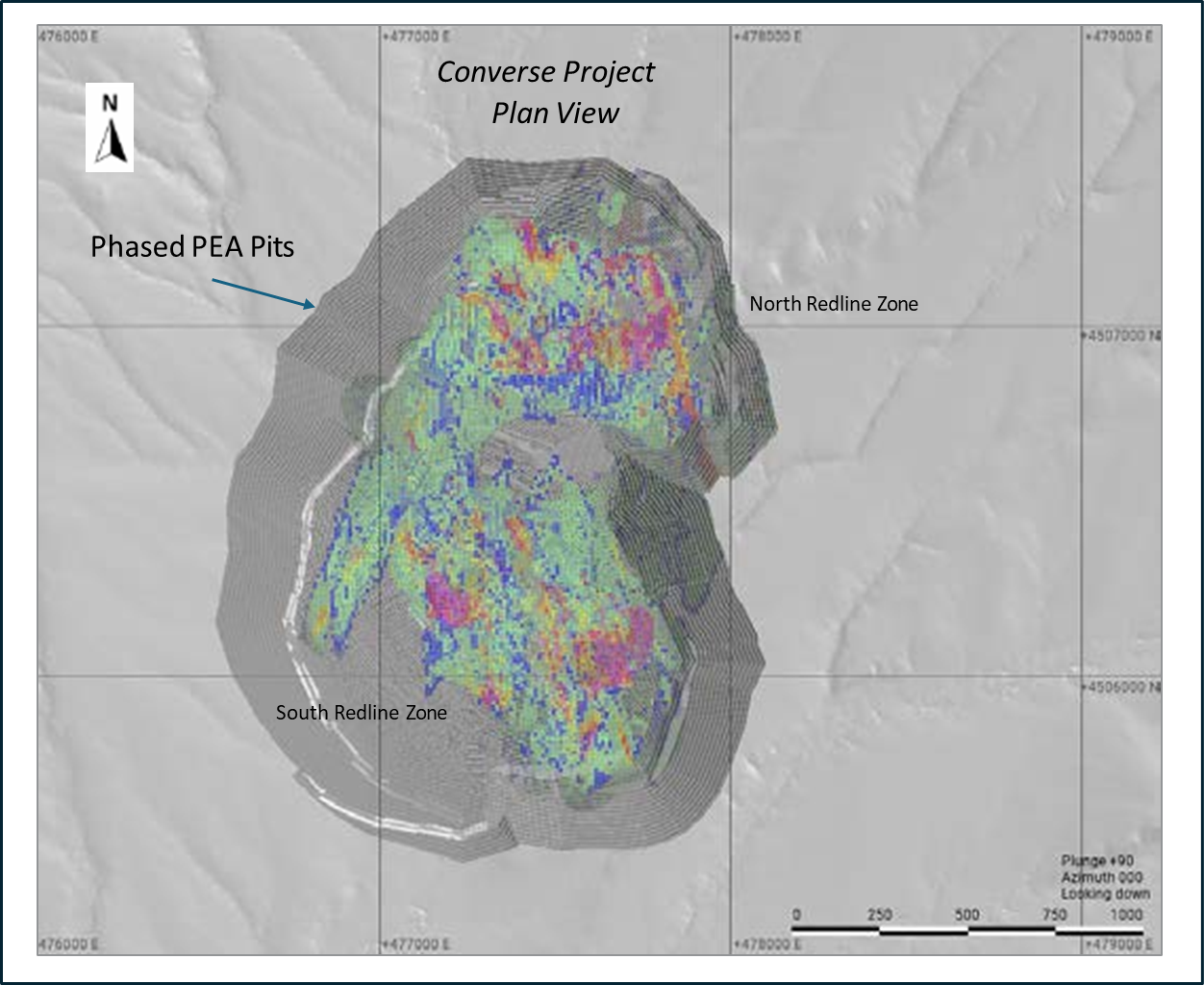
The Redline North and Redline South zones define the Redline deposit, which together delineate the core mineralized footprint at the Converse Property. The 13,257 acre Converse project is 100% owned and is located 34 km northwest of Battle Mountain and 73 km southwest of Winnemucca by Interstate I80 in northwestern Nevada.
Geology
The Converse project is located on the western margin of the Battle Mountain-Eureka Trend of north central Nevada, a prolific metallogenic belt that extends from the Twin Creeks gold deposit in the north to the Cove-McCoy gold deposit in the south. The trend has produced over 50 million ounces of gold over the past 25 years. Nearby mining operations include i80's (now closed) Lone Tree mine, 13.7 km north-northeast and SSR Mining's Marigold Mine situated 8 km east.
Gold mineralization at the Converse project is spatially associated with the Tertiary granodiorite to tonalite porphyry stock referred to as the Central Redline Stock. Mineralization is interpreted to have formed through the interaction of prograde and retrograde metamorphic fluids with calcareous and non-calcareous stratabound sedimentary units of the Pennsylvanian-Permian Havallah sequence, resulting in fine-grained, disseminated gold. Additional gold enrichment appears to be controlled by northeast-trending structures in the North Redline zone and along northwest-trending structures in the South Redline zone. Drilling completed by Roxmore in 2025, identified and modelled several multiphase mineralized breccia bodies, however the geometry, timing and controls of these breccia-hosted mineralized events are not fully understood and remain an area of ongoing study.
Oxidation ("oxide") occurs on average to depths of approximately 100 m below surface. Below the oxide zone, partial oxidation of sulphide minerals characterizes the transition domain, where sulphides are incompletely altered. At the North Redline zone, the transitional material extends 50 m to 100 m below the oxide zone, and 100 m to 450m at South Redline. All remaining mineralized material is classified as primary (mineralization) and is unoxidized.
A series of high-angle and low-angle faults modeled from lithology logging, geological interpretation, and observed grade transitions.
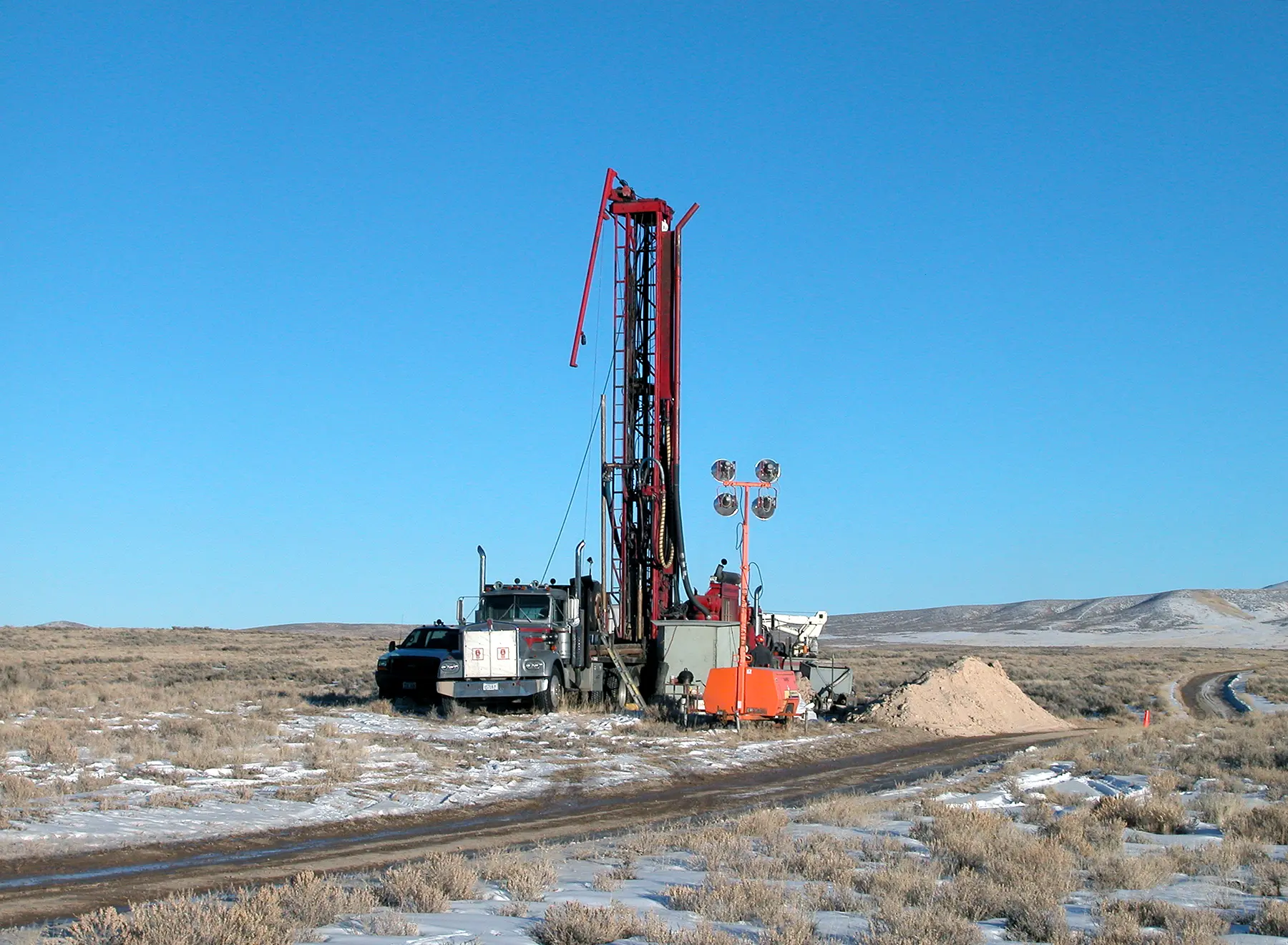
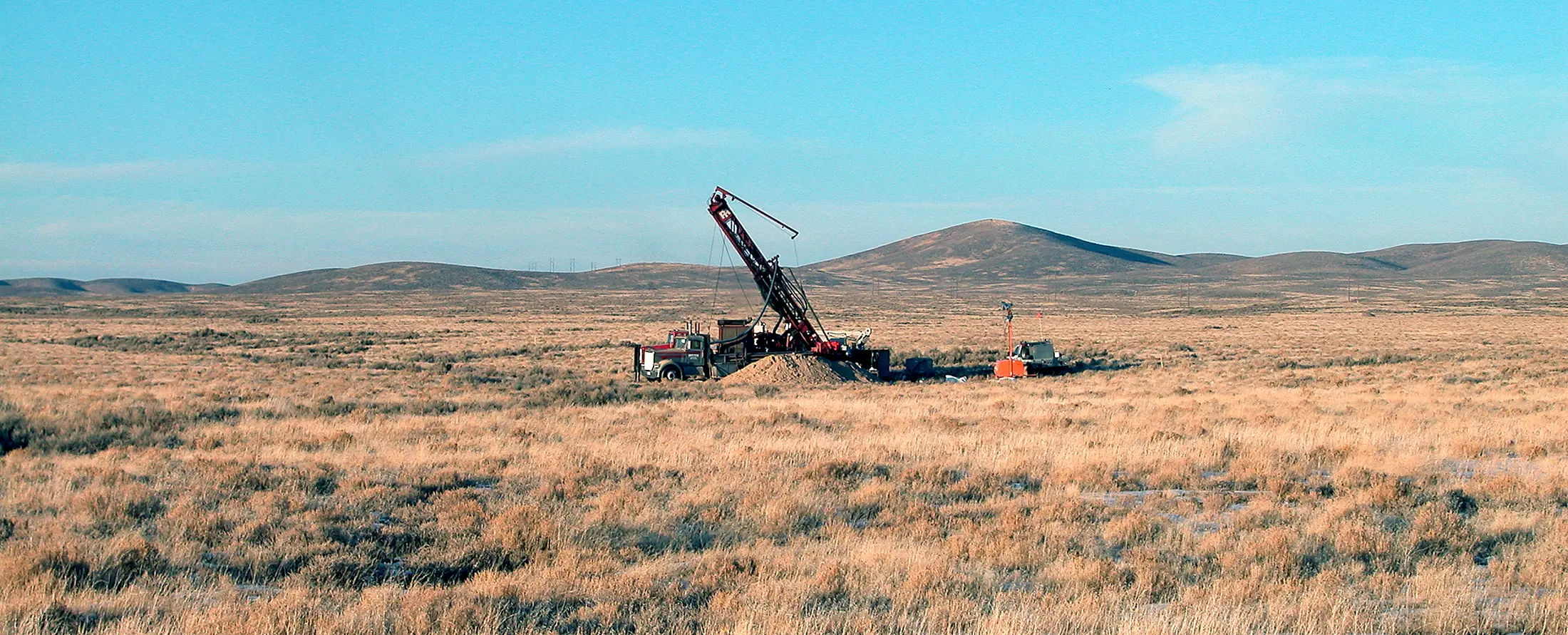
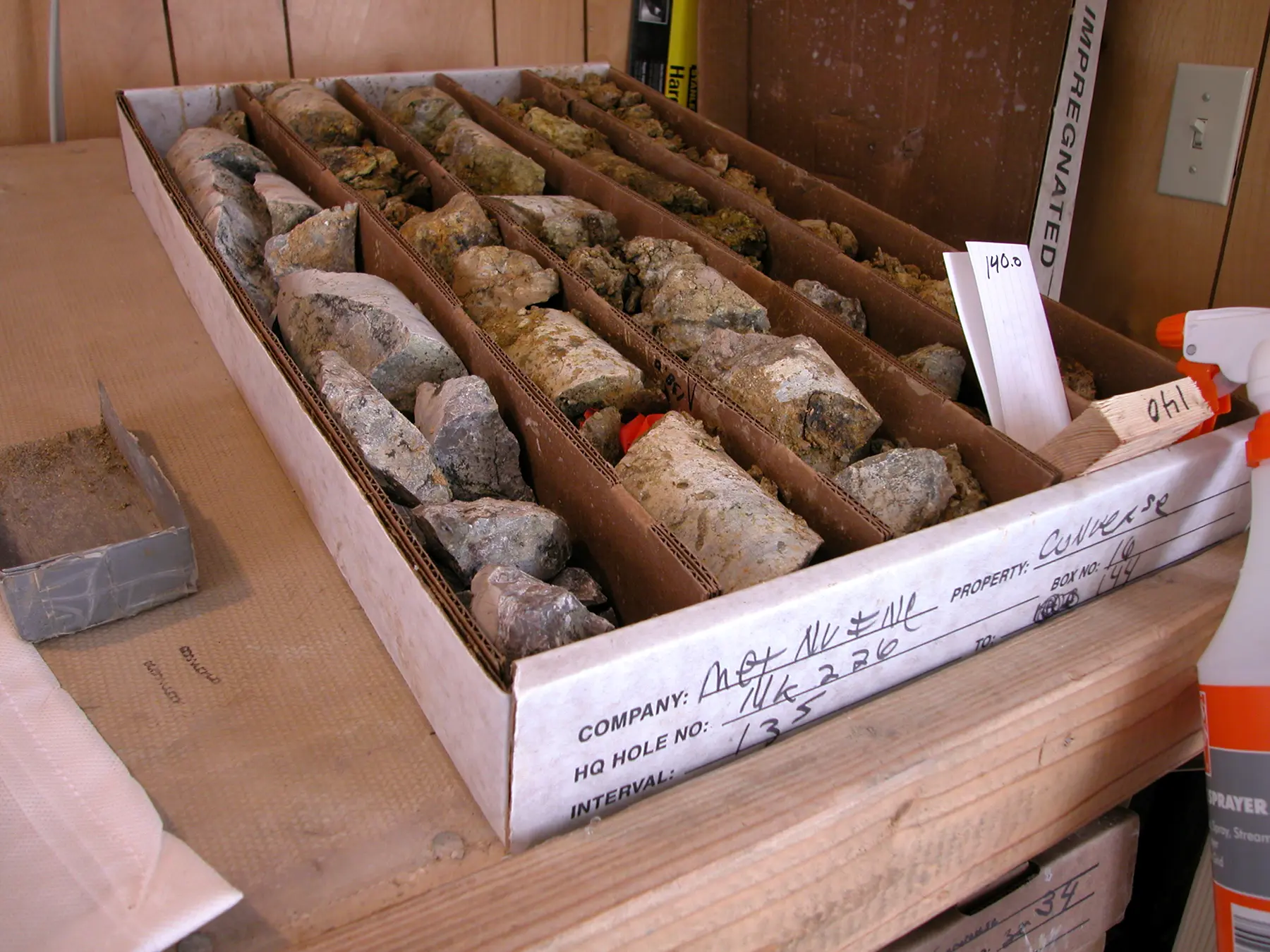
The Converse project is extensively covered by alluvium, which forms the overburden above mineralized bedrock. Overburden ranges from 25 m to 50 m above the Redline North zone and 30 m to 150 m over the Redline South zone. The overburden observed in core photos and exposed at the surface is largely unconsolidated.
Large updated Mineral Resource Estimate
Updated Indicated Mineral Resource estimate ("MRE") of 103 million tonnes (Mt) at an average gold grade of 0.65 g/t, containing 2.16 million ounces (Moz) Au and an Inferred Mineral Resource estimate of 218 Mt at an average gold grade of 0.43 g/t containing 3.04 Moz Au. The Updated MRE provides a more conservative estimate than the previous version, considerably reducing drill spacing for classification. This now forms the basis upon which to grow, with an ongoing aggressive development focused drill program underway.

Clear Development Pathway
Infill and extension drilling already underway to underpin a Preliminary Feasibility Study ("PFS") currently scheduled for H2 2027 with environmental permitting activities initiated.
Roxmore recently initiated a 30,000m infill and extension drilling program primarily targeting conversion and growth of Measured and Indicated Resources ahead of a planned PFS. Along with resource conversion, the program will also target growth potential through select extensions to deeper zones and shallow, high-grade oxide gold which may hold the potential to further improve production levels in the early years of the LOM.
Summary of PEA Results
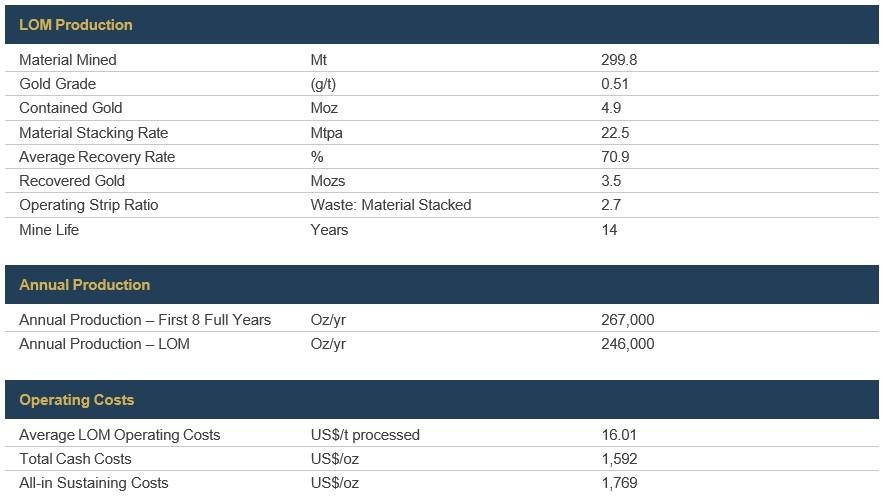
The PEA envisages an open pit heap-leach mine with an initial mine life of 14 years. Converse is forecast to produce an average of 246,000 ounces of gold per annum over the initial life of mine ("LOM") at an AISC of US$1,769/oz. For the first 8 years of operation, the mine is expected to produce an average of 267,000 ounces per annum at an All-in Sustaining Cost ("ASIC") of US$1,739/oz.
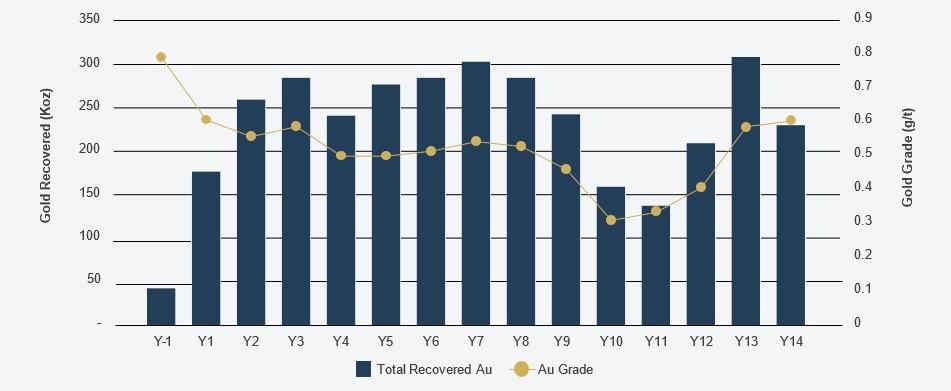
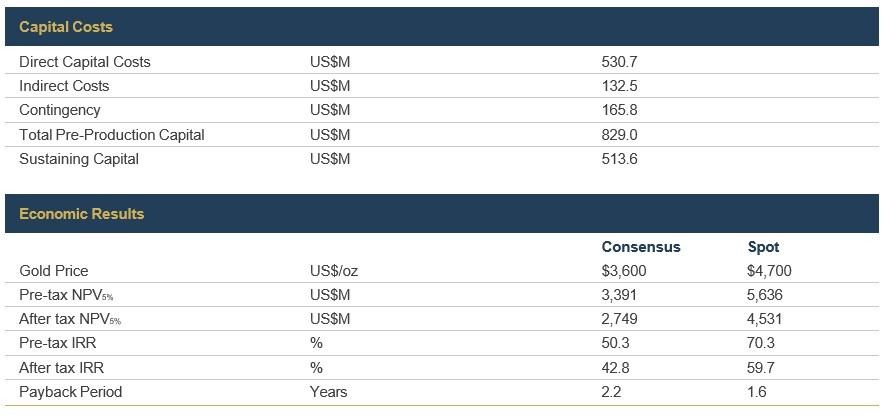
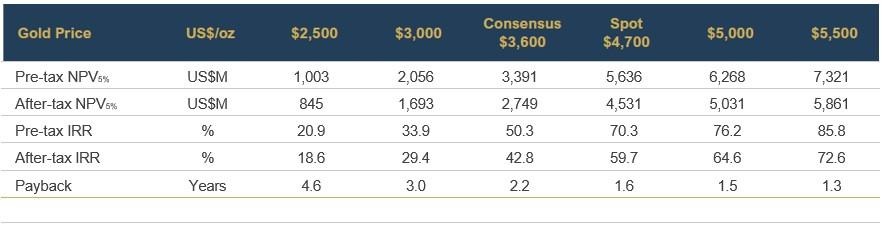
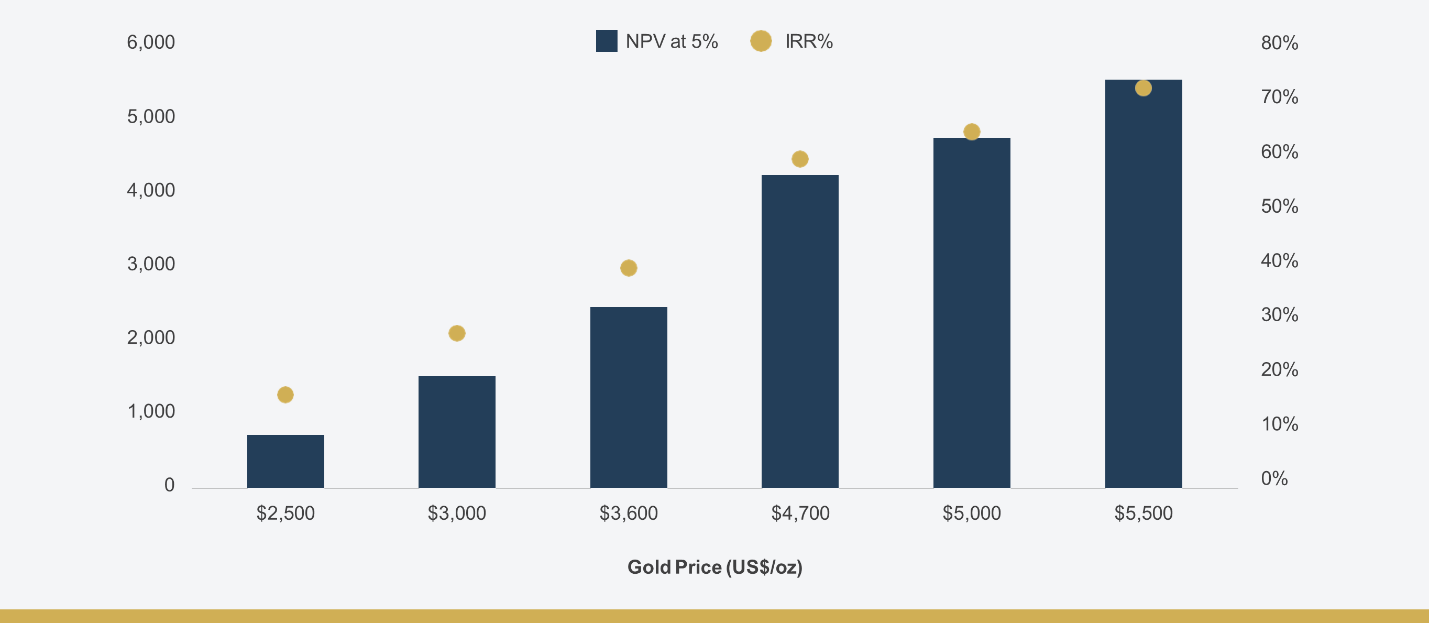
The PEA mine plan estimates a compelling internal rate of return (IRR) of 43% and after-tax net present value (NPV5%) of US$2.7 billion at the long-term consensus gold price assumption of US$3,600/oz. Using a spot gold price assumption of US$4,700/oz, the after-tax net present value (NPV5%) increases to US$4.5 billion and an after-tax IRR of 60%. The mineral resources included in the mine design are constrained by pit shells developed using a gold price of US$3,000/oz.
Economic Sensitivities
The following Table provides a summary of sensitivity results for key economic parameters at a range of different gold prices.
Gold Price Sensitivities
2026 Mineral Resource Estimate
The Mineral Resource Estimate ("MRE") supporting the PEA was prepared by SLR Consulting (Canada) Ltd ("SLR") and incorporates an updated geological model, revised interpolation methodologies, and updated resource classification criteria, particularly around the drill spacing required for measured, indicated and inferred classifications.
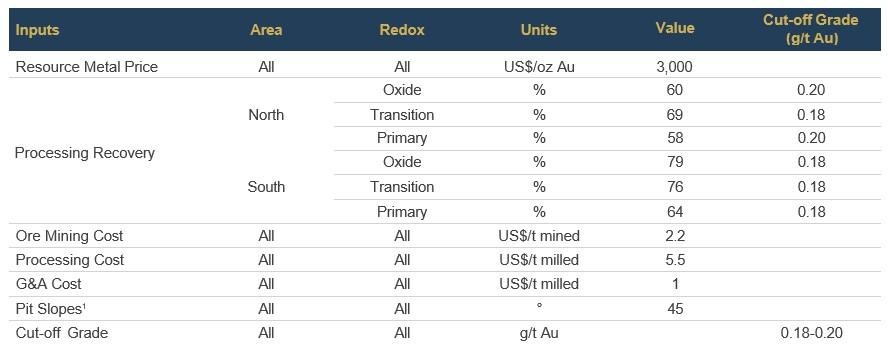
The open-pit Mineral Resource is reported at a cut-off grade (COG) of 0.18 grams per tonne (g/t) or 0.20 grams per tonne gold
(Au) domain-dependent and consists of:
- Indicated Resource of 103 Mt at an average gold grade of 0.65 g/t containing 2,162 koz Au and
- Inferred Resource of 218 Mt at an average gold grade of 0.43 g/t containing 3,035 koz Au.
The 2026 Mineral Resource estimate (MRE) has an effective date of March 31, 2026. The MRE was supported by verified data, robust geological models, and well-defined mineralized zones, and was constrained by informed open pit shells.
Notes:
- CIM (2014) definitions were followed for Mineral Resources.
- Mineral Resources are constrained by an optimized shell and are estimated above cut-off grades of 0.18 g/t Au or 0.2 g/t Au,domain dependent (See Table 2).
- Mineral Resources are estimated using a long-term gold price of US$3,000 per ounce.
- Recoveries are variable and based on equations derived from metallurgical testing.
- Bulk density is variable by rock type and redox domain and ranges from 2.62 t/m3 to 2.71 t/m3. Overburden was assigned a value of 1.8 t/m3.
- There are no Mineral Reserves. Mineral Resources that are not Mineral Reserves do not have demonstrated economic viability.
- A minimum mining width of 50m was used.
- Numbers may not add or multiply correctly due to rounding.
The QP is not aware of any environmental, permitting, legal, title, taxation, socio-economic, marketing, political, or other relevant factors that could materially affect the Mineral Resource estimate.
Notes:
- Pit Slopes uses 38 degrees for overburden
- Minimum mining width of 50m
Roxmore believes that the updated MRE provides a sound foundation to move the Project forward with a more robust estimate and greater understanding of geological controls upon which to base the assessment. The Company is confident that the current drilling program provides a significant opportunity to increase the overall size of the resource while also improving material classification.
Mining
The Converse Gold Project will be mined as a conventional open pit operation using a standard truck and shovel fleet combination, with dedicated ore and waste fleets.
High Level Mine design parameters include:
- Bench height: 10 m
- Overall Pit slope angles: 38° in overburden, 45° in bedrock
- Peak Mining rate: 257,000 tonnes per day / 90 Mt per year
- LOM Strip ratio: 2.71 : 1
- Mine life: 13.75 years (following a 9-month pre-production period)
The mine plan contemplates two interim development phases to prioritize oxide and near-surface mineralization, ensuring robust early cash flow before transitioning to the final phase pit.
Forthcoming geotechnical studies are designed to prioritize steeper pit wall angles in each rock unit, when supported by better geotechnical definition, with the benefit of improved LOM stripping ratios.
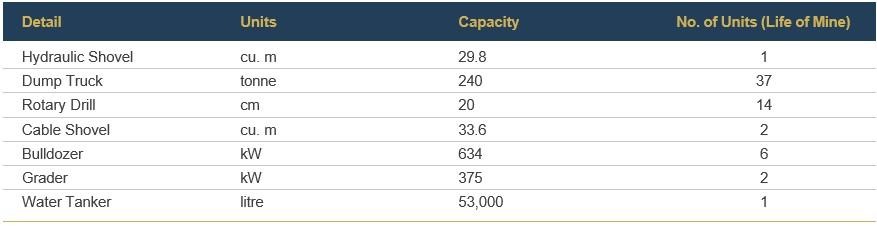
The Converse Project features a single large open pit and utilises a standard shovel and truck configuration with the mining fleet sized for maximum efficiency. The proposed mining fleet is detailed in the Table below:
Metallurgy & Processing
Extensive metallurgical testing demonstrates that the Converse Project mineralization is amenable to conventional heap leaching. Several extensive test work programs completed between 1997 and 2018, incorporating bottle rolls, column leach tests, comminution studies, and HPGR evaluations, form the basis for the selected process flowsheet. Key metallurgical parameters include:
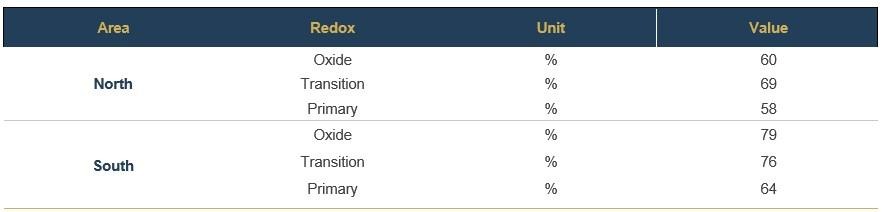
- LOM Recoveries: average 70.9% across all material types
- Crush size: 80% passing 6.3 mm.
- Au recoveries by Redox unit: As shown in Table 3.
- Cyanide consumption: approximately 0.64 kg/t.Lime/cement requirements: approximately 6 kg/t cement for agglomeration and pH control.
The PEA contemplates a heap leach operation processing ~22.5 Mtpa ( 61,600 t/d), consisting of a three stage crushing circuit (including HPGR), drum agglomeration with cement, a multi lift heap leach pad developed in phases, and an ADR (adsorption-desorption-recovery) plant producing gold doré. Pregnant solutions are collected via lined leach pads and ponds, with material handling supported by overland and grasshopper conveyors and a radial stacker.
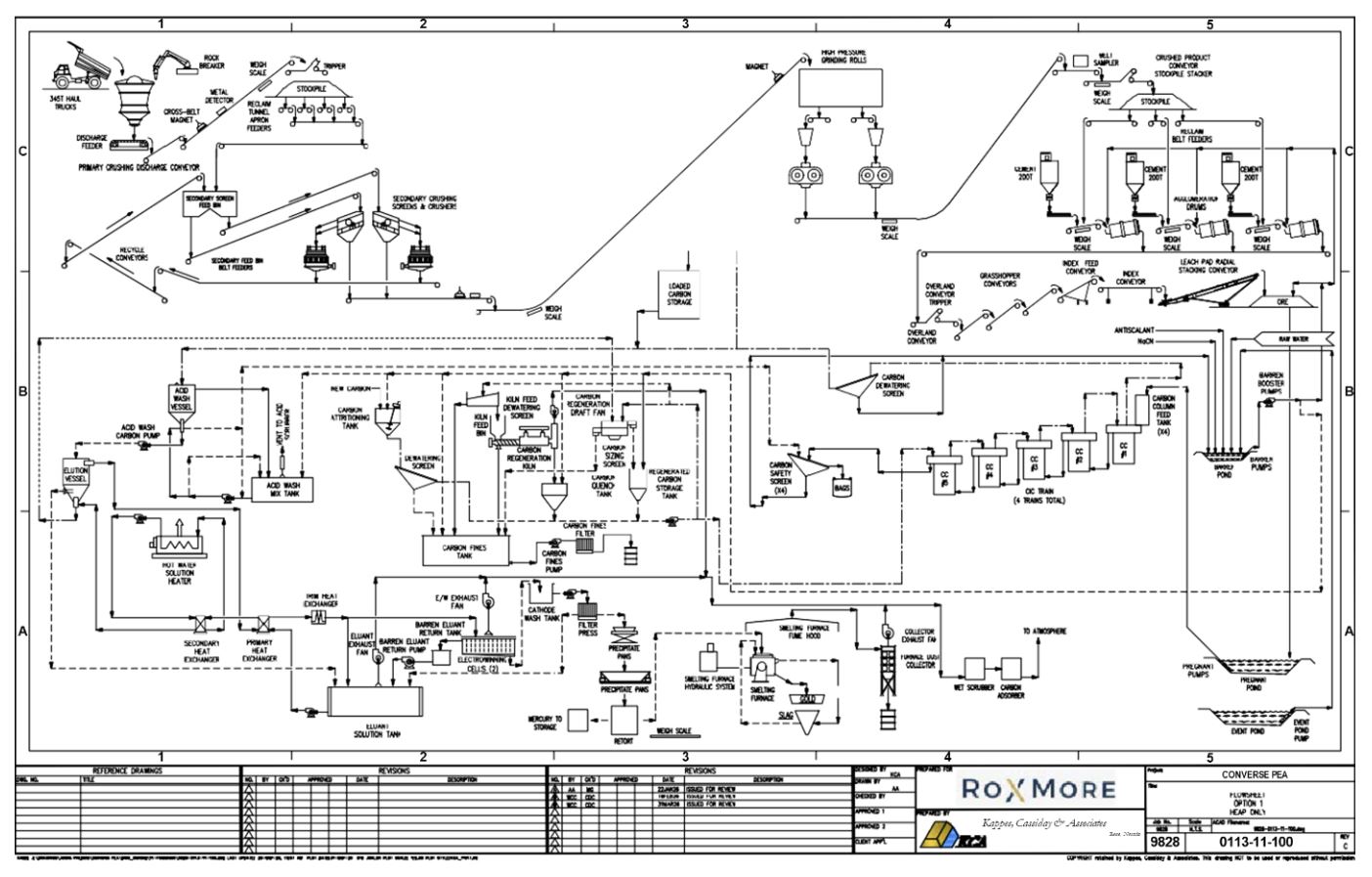
To support the PEA, Kappes Cassidy & Associates ("KCA"), a leading Nevada based metallurgical processing consulting group undertook a detailed review of the metallurgical testwork of the Converse Gold Project.
Extensive metallurgical testwork has been completed on Converse including 996 bottle roll tests and 75 column tests.
For the purposes of assessing its metallurgical recovery performance and not withstanding the fact that it will be mined as a single open pit, the Converse deposit has historically been divided into two separate zones, namely North and South Redline.
Further metallurgical testwork work is planned for the Converse Project including:
- Testing of material which is more representative of the redox domains in North Redline, as the Company believes that with further testwork of these domains, there is scope for improved metallurgical performance from this area.
- Evaluation of copper treatment options at Converse - while copper is not a dominant influence at the project, the scale of Converse dictates that this is an opportunity that be investigated from optimizing cyanide consumption and as a potential saleable copper product.
- Further optimization of the HPGR crush size and recovery relationship.
Infrastructure
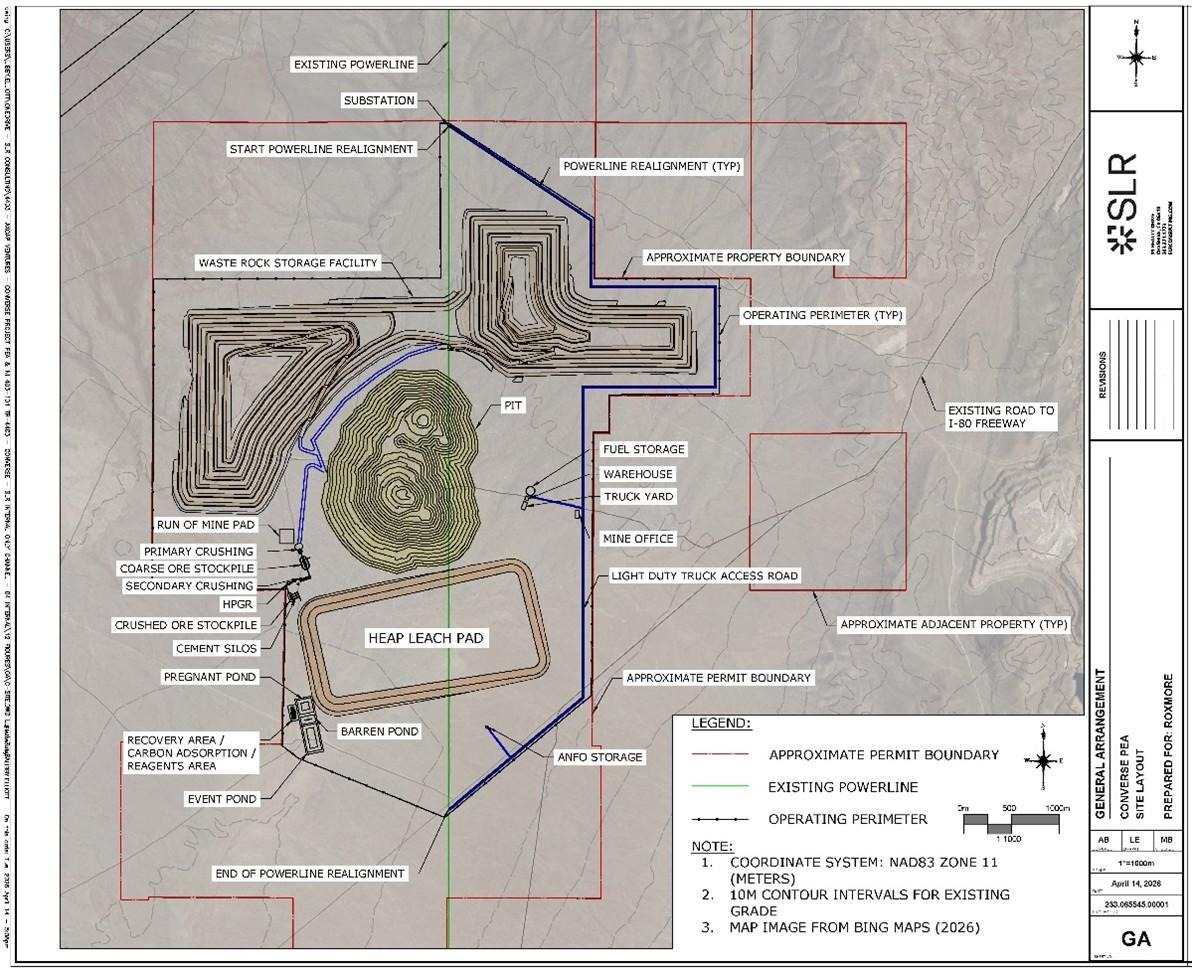
The Project benefits from:
- Flat terrain suitable for waste storage, heap leach pads, and plant facilities.
- On-site access to grid power
- Access to the nearby I80 interstate highway (< 10km), nearby town of Battle Mountain (< 30km) and the city of Winnemucca (< 70km) for labour, fuel, mining fleet support and supplies.
- Established mining culture and workforce in the region and located immediately west of the operating SSR Marigold heap leach gold mine.
Capital Costs
The total pre-production capital costs for the Converse Gold Project are estimated at US$829 million. This is comprised of US$531 million in direct construction costs, US$132 million of indirect costs and a contingency allowance of US$166 million. Total LOM sustaining capital is estimated at US$513 million and closure costs of US$100 million.1

Operating Costs
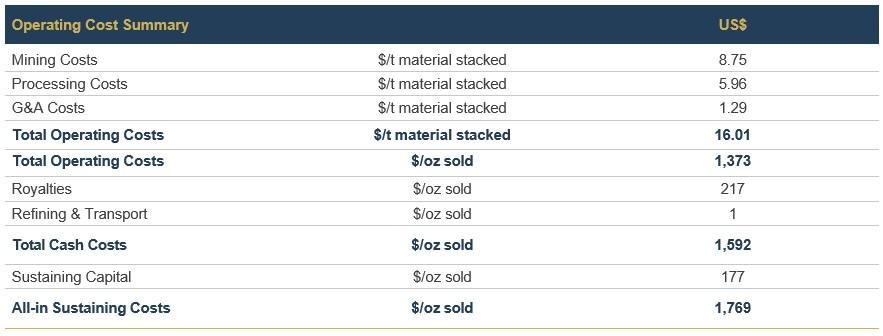
Operating costs average US$16.01/t stacked and are based upon estimates provided by KCA and SLR. Cash costs are expected to average US$1,592/oz over the life of the mine and All-in Sustaining Costs ("AISC") are forecast to be US$1,769/oz.
Environmental, Permitting & ESG
The Converse Project is a greenfield gold development project located on a combination of unpatented federal mining claims administered by the U.S. Bureau of Land Management (BLM) and privately held fee land in Nevada. Over the course of the past six months, the project land position has increased by approximately 70% as a result of a program of additional staking and acquisition.
Exploration activities are currently permitted under an approved BLM Plan of Operations and Nevada Division of Environmental Protection (NDEP) reclamation permit, with an associated reclamation bond in place. Environmental baseline data collected to date have not identified any material environmental liabilities, and no known factors have been identified that would materially limit project development under existing regulatory frameworks.
The Company holds water rights that have been converted from agricultural to mining use. Project advancement will require permitting at the state and federal levels, including amendments to existing Plans of Operations for mine development, tailings, and heap leach facilities, with closure and reclamation requirements integrated into project design from the outset. The Project lies within a well established mining region, and no material social, land use, or community-related constraints have been identified that are expected to adversely affect permitting or development.
Historically, the unoxidized portion of the deposit has been described as sulphide material. However, average sulphide content is low, generally less than 0.5%. As outlined in the PEA, this low sulphide concentration, combined with the presence of carbonate-rich host rocks, supports classification of the system as non-acid generating. Neutralization capacity within the host lithologies is sufficient to offset the limited acid potential associated with sulphide oxidation.
In the near term, the Company will initiate hydrogeological, geochemical and biological baseline programs to begin collecting the long-lead data required to support permitting works and detailed engineering at the PFS level. This work will include groundwater monitoring, surface water characterization, and geochemical sampling to establish baseline environmental conditions and inform key design parameters such as water management, pit dewatering, and material handling. Early commencement of these programs reflects a proactive approach to de-risking the project, ensuring that critical datasets are in place to support future technical studies, permitting, and development planning.
Additional Opportunities
Milling/Pulp Agglomeration
Work undertaken by KCA has indicated that previous metallurgical testwork demonstrates that the primary material from Converse is responsive to milling in order to achieve a smaller particle size to potentially improve gold recoveries. As per Table 9 below, metallurgical recoveries for gold have been demonstrated in a range of 91-96% across various redox classifications.
While outside the scope of the current PEA, further testwork and trade-off studies will be undertaken to ascertain the economic implications of milling a higher grade portion of the sulfide material at Converse to improve recoveries above what could be expected from the heap leach.
The addition of pulp agglomeration represents a potential enhancement to the baseline heap leach flowsheet at Converse, particularly as a greater proportion of fresh rock is introduced into the mine plan. The process involves grinding a portion of the mineralized material, followed by agglomeration with cyanide and binders to improve permeability and increase gold and silver exposure to leaching solution. These agglomerates would then be recombined with the standard HPGR crushed materials for placement on the leach pad.
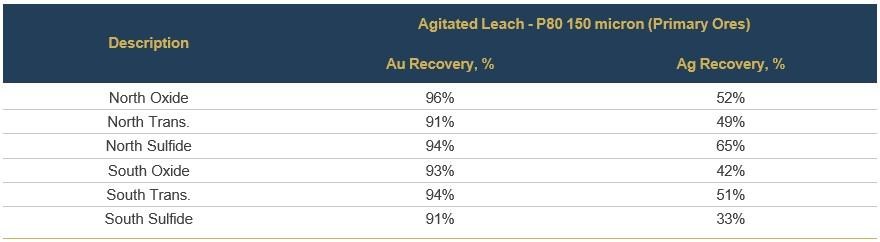
Testwork as summarized above in Table 9, has demonstrated that when material is ground to approximately 150 microns and processed under agitated leach conditions, gold recoveries in the mid-90% range are achievable, highlighting the intrinsic leach kinetics of the Converse system. While the current base case remains a conventional crush and heap leach operation, pulp agglomeration offers a potential pathway to improved leach recoveries as fresh rock proportions increase without fundamentally changing the project's development strategy.
Silver Occurrence and Data Limitations
Silver is known to be present throughout the Converse deposit based on historical drilling and reporting, however it is not currently included in the MRE. This is primarily due to incomplete assay coverage, with less than 50% of drill samples analyzed for silver, and variability in analytical methods, including a mix of two-acid and four-acid digestion techniques. Despite these limitations, historic datasets and select drill holes consistently demonstrate a correlation between gold and silver mineralization. These results provide confidence in the presence of a meaningful silver component, but the current dataset does not meet the consistency and completeness thresholds required for formal estimation under NI 43-101 guidelines. The company is in the process of reviewing existing data and materials with the goal of including a silver component for the resource in future estimates.
Metallurgical testwork completed to date indicates that silver is recoverable through the same heap leach process designed for gold extraction, with average recoveries on the order of 30%. Silver dissolution occurs concurrently with gold during cyanide leaching, contributing additional payable metal without requiring significant process modifications. While recoveries are lower than those typically achieved for gold, silver nonetheless represents a potential by-product credit that may enhance project economics. As with gold, ongoing and future metallurgical programs, including variability and column testing, are expected to further refine silver recovery assumptions as part of broader process optimization.